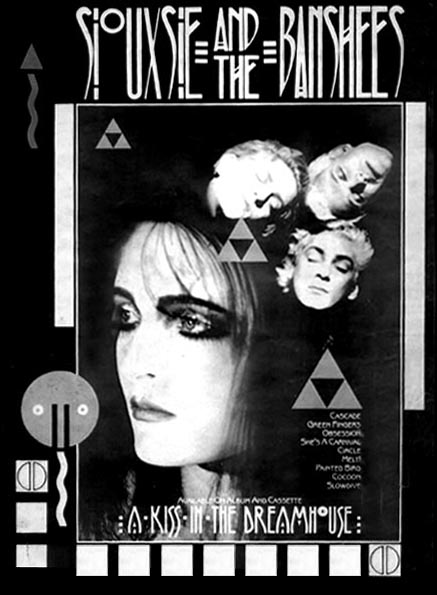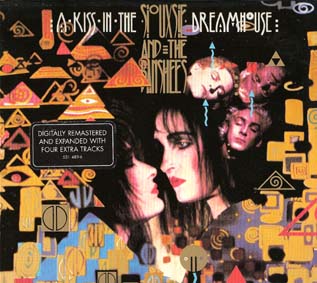
Click on cover for full scan
Liner notes courtesy of Paul Morley
| A
KISS IN THE DREAMHOUSE
Includes scans of LPs, cassettes, CDs, promos, imports, limited editions and adverts. Also includes track listings, catalogue numbers, release dates, chart positions, credits, liner notes and reviews. |
|
|
| REMASTERED CD | |||
|
|
|||
| |
|||
| UK CD | Track Listing | ||
|
|
|||
|
Click on cover for full scan
|
|||
| Notes: |
All songs remastered Liner notes courtesy of Paul Morley |
||
| Released: | 06/04/09 | ||
| UK Chart: | No. | ||
| US Chart: | No. | ||
| Sleeve Design: | Rocking Russian | ||
| Reissue Designed By: | Bold, London | ||
| Producer: | Banshees | ||
| Digitally Remastered By: | Kevin Metcalfe | ||
| Tapes Sourced By: | Pete Matthews/Steven Severin | ||
| LINER NOTES | ||
|
|
||
| And
then there was the fifth Siouxsie and the Banshees studio album A Kiss
In The Dreamhouse, released in 1982, and it might be your favourite
Banshee album, it might be mine, it all depends on the time of night
that I heard it, and what kind of storm is rattling the skies
outside. By now - they'd written many songs, and worked hard on
their sound, and easily separated themselves visually from the common
herd, and they were flourishing, moving from album to album with a sense
of purpose that could sometimes spill over into triumph - when the group
made an album it was like a spooky, spectacular house that you could
enter, if not exactly take shelter inside. At the back of the
house, there was always an overgrown garden of delights, extending into
a distance that could guide you to heaven or hell.
It was a little futile, really, to say, well, it's not as good as their last album - Juju - and it reminds me of the one before Juju - Kaleidoscope - in the way that it appears to be recovering from something, a catastrophe, or just an outburst of energy. It was another episode, another series of events and moments, where space and time overlap and intertwine, and ambiguity and uncertainty are the norm, and the funny thing is that now the group are no more we can see that this album, this set of songs and atmospheres, is absolutely the perfect fifth album by Siouxsie and the Banshees. It's the perfect sequel to Juju, which was the only way in hindsight that they could have followed Kaleidoscope, which was how they healed themselves after their second record, Join Hands, which was a fractured album of pain and turmoil that followed their startling dramatic and energetic debut, The Scream. And where it went next was, we can see and hear now that everything has happened, is exactly where it had to go. Their albums had become living story books, set in another world, a world that reflected back at us parts of this world that we tend to avoid and ignore and escape. Even though they appeared in the charts and had a punk rock history, so there was a sort of familiarity about the group, and Siouxsie was a more authentic female pop star than just about anyone on the planet, the group was writing music that celebrated demented beauty and that implied, explosively, that something momentous was approaching, or departing. They weren't by any means your average pop group singing songs of safety. Their songs pulled silver threads from the coarse texture of daily life, poured dazzling light on the depraved actions of perverts and executioners, feared for our collective sanity, confronted the mystery of existence, created metaphysical landscapes that sparkled with a thousand lights, had inklings of a superhuman order, wrote about childhood with lyric ferocity. They didn't make albums in the traditional rock sense. After all, here was a rock group who had decided, not necessarily because they began the same time punk did, more possibly because of something that Edgar Allen Poe once wrote, or a substance they had swallowed on a long journey into the night, or a ferry to Calais, that they were committed to replacing God with artistic intention. It's amazing under these circumstances that they ever appeared in Top Of The Pops. On the other hand, all the best things that ever interrupted the gaudy flow of that show with something stunning and novel tended to share a similar high minded aesthetic, even if that was connected to a passion for a bright, empathetic pop song. Five albums old, Siouxsie and the Banshees were compiling these intoxicating anthologies of sexual seduction and self-understanding, confronting the horrors that the mind can conjure, and it was no wonder that their music soon inspired hundreds and thousands of sad, shrouded and alienated creatures dressed in black, many of them looking as though they formed themselves out of wax and coal to mirror the look of Siouxsie, their surging, artistic and exquisitely timeless leader. Some of us listened to Siouxsie and the Banshees for, amongst other things, the gothic thrills, they way they turned the agony of life and death into pop music. Others took it, for better or worse, far more seriously. All their albums could now be called Tales, or Tales from within Tales, and they tended to describe, using a pop music as framed and fired by punk, how we grow from one place to another, or one mental stat to another, because of all manner of conflicts. They'd embraced, or resigned themselves, to outsider status, whatever their positions in the charts, whatever the size of the venues they played, and however welcomed they superficially seemed inside the rock merry-go-round. Looking back we see how the group's heart was Siouxsie and Severin, a fluid mixture of metal and membrane, elucidation and pulse, the pair of them locked in their own rooms writing monstrous, acid his-and-her words about words and desire and terror. Drumming in complete sympathy, sticking to the plan whatever the circumstances, keeping his head down and his arms strong, searching for the meaning of it all through rhythm, was Budgie. He became a second heart. Because it was set up this way, and the group remained faithful to the first urgent, precarious noises they mad however far from the nest they soared, however many bells, strings and echoes crept into their arrangements, there are guitarists that sail in, and fly out, or start with the best intentions, and find that there is more stress involved than they might have thought. There was certain stress involved in being a guitarist in Siouxsie and the Banshees because it was often demanded of such an officer and gentleman that he produce sound that could merrily and scarily represent energy that seemed robed in death's foam, or conjure up a marble swirl, a leap into the abyss, the rough caress of a cat's tongue, or the way that love can turn to hate, or the way cloudy black worms slither into cracks across the floor, or how a lover's hand can rustle endearingly over your skin, and the way that a kiss can end with both party's perishing on each other's lips. A Banshee guitarist was expected to appreciate how a riff, a slash and ripple of notes, might imply to the listener the sound of black branches clicking and sagging with ice, whilst also sounding like it might be something a lusty Iggy Pop might like to get his rotten teeth into. No wonder they never lasted long. On Dreamhouse, the guitarist is John McGeoch, who in his own rampant, earthy way knew how to produce the foam, the saliva and the cracking, for as long as it took. He's another heart here. He helped the group add rich depth, colour and spice to their sound. His approach was more conventional and direct than Siouxsie's or Steven's, and the combination of his discipline and their intuition was a significant factor in how Siouxsie and Severin stitched together their shattered group after their original guitarist and drummer fled into a godforsaken night, or refused to budge from a service station on the M6 - the pair had stretched themselves to breaking point making the group's debut album The Scream, leaving S and S bereaved and livid surrounded by broken dreams and a halo of flies. John McGeoch had moved from the house of Magazine, a group led by the mysteriously worked up and theatrically minded Howard Devoto, so he was used to playing guitar in savage, ceremonial ways that could whip up a frenzy whilst articulating anxiety and the roots of distress. He was perfect for both the extravagantly nervous Magazine and the sensationally neurotic Banshees, not least because he could make the guitar sound like it was actually watching the listener. He could creep into the soul of the listener whilst they were preoccupied with the preoccupations of the singer, and later the listener might find themselves more disturbed by the guitar than the words. On Dreamhouse, Siouxsie and Severin swap their fraught blasphemous tales of violence, loss, sex, claustrophobia, their obsessions with sin and self. All their characters are alone. The group is alone, making an album that is alone. Siouxsie sings his lyrics and hers with isolated grandeur, now such a great 20th century singer, with a voice that's all hers, even as she sings a song about feeling death's touch with an orgasmic thrill. Assigned to a world that exists beyond familiar horizons, her voice remains detached, but it's a detachment that gives credence to these truly fantastic stories. This being a Siouxsie and the Banshees album, it is not far fetched to consider the following... No matter how much we fill our lives with places to go and people to see, no matter how we perceive our nearest and dearest, and no matter how we strive to realise our dreams, we are alone with our thoughts at the end of the day, and, suddenly, the shades are drawn, shutting out the passage of the light. The bells have stopped ringing. A Kiss In The Dreamhouse has ended, it was a hell of a thing, and now we wait for what happens next. Paul Morley 18/12/08 |
||
| IMPORTS/PROMOS | |||
|
|
|||
| |
|||
| UK Promo CD | Track Listing | ||
|
|
|||
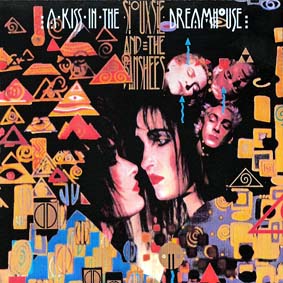 Click on cover for full scan
|
|||
| Notes: |
All songs remastered Liner notes courtesy of Paul Morley |
||
| Released: | 06/04/09 | ||
| UK Chart: | No. | ||
| US Chart: | No. | ||
| Sleeve Design: | Rocking Russian | ||
| Reissue Designed By: | Bold, London | ||
| Producer: | Banshees | ||
| Digitally Remastered By: | Kevin Metcalfe | ||
| Tapes Sourced By: | Pete Matthews/Steven Severin | ||
| PRESS | ||
|
|
||
|
||
More press... |
||
| CD | |||
|
|
|||
|
|
|||
| UK CD | Track Listing | ||
|
|
|||
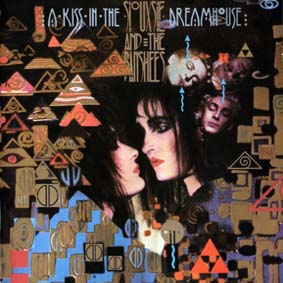 Cat: 839 007-2 Click on cover for full scan |
|||
| First Released On CD: | 24/04/89 | ||
| UK Chart: | N/A | ||
| US Chart: | N/A | ||
| Sleeve Design: | Rocking Russian | ||
| Producer: | Banshees | ||
| PRESS | ||
|
|
||
| Q 1989 | ||
 Chilling Chilling
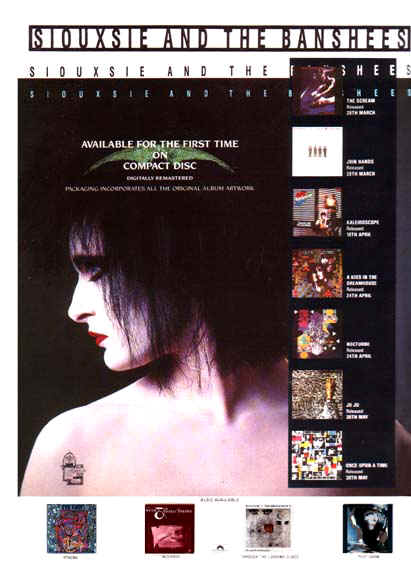
From ice maiden to carnival queen - Siouxsie And The Banshees on CD. At the dawn of punk, Siouxsie Sioux was chiefly renowned for her dismissal of Bill Grundy as "a dirty old man" and for a dress sense designed to provoke an outbreak of British sexual hypocrisy. The Banshees may have made their debut at the 100 Club Punk Festival in 1976 but their extended assault on The Lord's Prayer was as much a dare as a stab at launching a career. Siouxsie's original invention was herself and that unflinching stare remains one of the great icons of punk's disdain. These beginnings render it all the more surprising that, 11 albums on, the Banshees have long transcended the first flush of punk to create an unmatched legacy of dramatic and very British pop. Polydor's release of the first seven Banshees titles on CD means that all their output is now available on compact disc bar the two "holiday projects", The Creatures and The Glove. If Siouxsie's reputation remains that of the haughty Queen of Gothic Punk, these CDs suggest that, within the parameters of their brooding and fantastical world view, there is a good deal more to Siouxsie and her long-term partner Steve Severin than that enduring image suggests. Although Siouxsie and Severin's punk credentials are impeccable, the Banshees were the last of the original punk clan to release a record. By the time Hong Kong Garden entered the Top Ten in August 1978, the Banshees had already seen their fair share of touring and rapidly progressed beyond the confrontational three-chord thrash that had rendered punk a musical cliché. Spearheaded by John McKay's sheet-metal guitar, their debut LP The Scream virtually invented the Gothic rock genre overnight and stands alongside Magazine's Real Life as a turning point in punk's movement away from rabble-rousing and into the internal landscape of the psyche. While songs like Carcass are dated by their goose-stepping beat and stone-faced delivery, the gut-wrenching Overground and the dizzy Jigsaw Feeling demonstrate that already the Banshees were far more concerned with psychodramas of disgust than confronting society head on. The Scream was a new take on suburban angst as Siouxsie's howling vocals intimated that the boredom and alienation of suburban life amounted to nothing less than a horror show. On later albums, the Banshees would uncover a rich exoticism in suburban fears; on The Scream, Steve Lillywhite's thundering production ensures that they sound trapped. Restored on CD to all its forbidding austerity, The Scream is both a declaration of intent and something of an artistic full stop. The following year's Join Hands indicates that while only PiL could match the Banshees' chilling wail of noise, they'd left themselves little room to manoeuvre. McKay's guitar still seesaws disturbingly and Severin's ear for compelling bass riffs is apparent on Placebo Effect, but while Siouxsie turns domestic claustrophobia into Gothic nightmare on Premature Burial and Mother, her vocals are oddly unwieldy. While Hong Kong Garden had displayed an ability to combine a playful sense of unease with driving pop melody, on Join Hands there are only riffs. The departure of McKay and drummer Kenny Morris a mere four days after its release suggests that the Banshees' two halves had indeed reached an impasse. The next album Kaleidoscope featured the now long-serving Budgie on drums and guitar work from John McGeoch and Steve Jones. The Banshees' embattled state obliged Sioux and Severin to rediscover their pop flair and the album's tow singles, Happy House and Christine, display a renewed ability to surround Siouxsie's icy mixture of fatalism and sarcasm in the kind of melodies that even a punk's parents might hum. The inventiveness of a piece like Red Light, driven along by the clicks of a camera shutter, proved that the Banshees were considerably more than a one-trick pony. 1981's Juju finds McGeoch firmly ensconced on guitar, Sioux and Severin devoting themselves to an exhaustive exploration of the power of idols and the Banshees reborn as a magisterial hard rock band. On moody songs like Arabian Knights, Siouxsie unveils a new sensuality while the Banshees display the brooding authority of the Stones circa Paint It Black. Juju confirmed the Banshees' staying power even if their frequent assaults on the singles chart has never own them a mass following like that of The Cure. Most early Banshee albums have their indigestible moments and the argument that they are the best singles band gains some credence from the Once Upon A Time collection where early singles like The Staircase gain contrast from later stabs like the eerie Israel. A sequel is now surely due. A Kiss In The Dreamhouse (1982) found the Banshees further investigating the kind of offbeat textures that Brian Jones brought to the Stones in the mid-'60s. Songs like She's A Carnival and Cascade make gorgeous use of strings while Siouxsie's voice acquires a hidden warmth for studies in erotic extremity like Melt! and Obsession. Dreamhouse probably remains the Banshees' finest hour. In 1983, the Banshees marked time with the live Nocturne, a well-recorded resumé of the band's capacity for Sturm und Drang lightened by the occasional exchange with the audience ("What time tunnel did you crawl out of?" Siouxsie asks one particularly nostalgic punk fan). McGeoch had flown the nest immediately after the Dreamhouse and Nocturne misses his magisterial authority despite Robert Smith's capable but understandably muted understudying. Smith soon departed in turn and the Banshees spent the mid '80s trying to capture their old fire. The Banshee's origins and Siouxsie's forbidding stare have made it hard for them to escape their punk associations while their use of horror imagery has occasionally blinded fans to the questions of power and threatened innocence their unsettling narratives explore. These CDs lend their work a fresh clarity and trace a remarkable evolution which serves as a reminder that, for its bravest exponents, punk was always more a question of daring than a set of conventions. The Scream 4/5 Mark Copper |
||
More press... |
||
| LP/CASSETTE | |||
|
|
|||
|
|
|||
| UK LP | Track Listing | ||
|
|
|||
 Cat: POLD 5064 Click on cover for full scan |
|||
| UK Cassette | Track Listing | ||
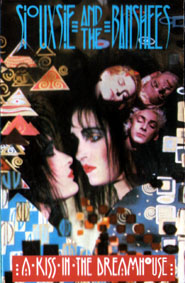
Cat: POLDC 5064 Click on cover for full scan |
|||
| Released: | 05/11/82 | ||
| UK Chart: | No. 11 | ||
| US Chart: | Didn't Chart | ||
| Sleeve Design: | Rocking Russian | ||
| Producer: | Banshees | ||
| IMPORTS/PROMOS | |||
|
|
|||
|
|
|||
| Japanese Import LP | Track Listing | ||
|
|
|||
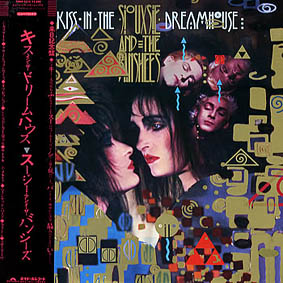
|
|||
| PRESS | ||
|
|
||
|
|
||
| Vividzine | ||
|
|
||
|
Shane |
||
|
|
||
| Green Fingers Lyrics | ||
|
Hibiscus
head |
||
| Green Fingers Credits | ||
|
Sioux -
Lyrics |
||
| Inspiration/Influence/Band Comment: | ||
| Inspired by an episode of Rod Sterling’s Night Gallery with the title Green Fingers; A property developer wants to get his hands on the land owned by an old lady. He uses all the means at his disposal. What he doesn't know is that the lady in question has a strange affinity with plants. Another inspiration was the film Motel Hell; Farmer Vincent kidnaps unsuspecting travellers and is burying them in his garden. Unfortunately for his victims, they are not dead. He feeds his victims to prepare them for his roadside stand. | ||
|
|
||
| She's A Carnival Lyrics | ||
|
In the
heart of the night So with
your hands upon the hips |
||
| She's A Carnival Credits | ||
|
Severin -
Lyrics |
||
| Inspiration/Influence/Band Comment: | ||
| Although not about her, the inspiration for the song 'She's A Carnival' began with frequent clubber and now club DJ Princess Julia. | ||