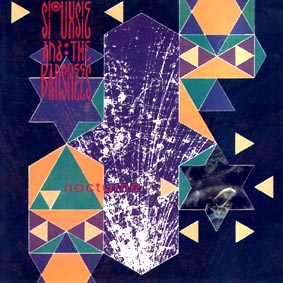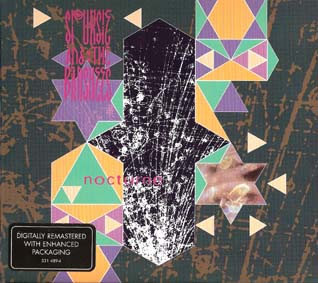
Cat: 531 489-4
Click on cover for full scan
Liner notes courtesy of Paul Morley
| NOCTURNE
Includes scans of LPs, cassettes, CDs, promos, imports, limited editions and adverts. Also includes track listings, catalogue numbers, release dates, chart positions, credits, liner notes and reviews. |
|
|
| REMASTERED ALBUM | |||
|
|
|||
| |
|||
| UK Promo CD | Track Listing | ||
|
|
|||
|
Cat: 531 489-4 Click on cover for full scan
|
|||
| Notes: |
All songs remastered Liner notes courtesy of Paul Morley |
||
| Released: | 06/04/09 | ||
| UK Chart: | No. | ||
| US Chart: | No. | ||
| Sleeve Design: | Banshees/Da Gama | ||
| Reissue Designed By: | Bold, London | ||
| Producer: | Banshees/Hedges | ||
| Digitally Remastered By: | Gary Moore/Kevin Metcalfe | ||
| Tapes Sourced By: | Steven Severin/Zoe Roberts | ||
| LINER NOTES | ||
|
|
||
| And
then there was Siouxsie and the Banshees, shock horror, with a temporary
guitarist in the dazed, agitated, near celebrity form of The Cure's
Robert Smith, playing two nights at the Royal Albert Hall in the misty,
chilly winter of 1983. They were quite comfortable, because of
their vivid imaginations and the clothes they wore, in the damned lavish
surroundings, fitting in more than most, grand, graceful entertainers
with a tantalising, vaguely criminal background in punk rock who were by
this time abstract experts in their own form of bleak, bruised show
business.
They were a sombre, inscrutable group, albeit quizzically alert and dressed for quietly mystical shenanigans, and they took their place inside the dreamy, historical hall as though it was both an everyday occurrence and also a kind of fairy tale. It was very natural but also more or less supernatural, which suited them just fine, as their music constantly expressed interest in the relationship between the sinister mundane and the frankly transcendent. Not many pop groups so spectacularly and bravely charted the waters between the solid real world, and a world that is not as such so solidly real, not as such built up out of routine and habit, but which shimmers and shivers with giddy menace at the frayed edge of the real. It was audacious, but it gave us some fantastic and exultant pop music. Siouxsie and the Banshees, that's the spirit, took the opportunity to treat the venue like a castle - their own opulent private space where they could speak with some authority about invented creatures, spiritual experiences, insane tenderness, psychological woes, whimsical impulses, solitary sexual dreaming, twilight realms, genes and keepsakes and the futile lurchings of the human heart - and got on with their business. This business was always so much their business that they became one of the strangest, loveliest pop groups that ever there was. They were just a few years old. They were, in a way, children, although, of course, they were as depraved as they were innocent, as disenchanted as they were alive with possibility Their early days had already been elevated into a kind of fable, involving as they did a fresh faced, anti-social Sid Vicious, the Lord's Prayer, a scorched, carnal glamour, pain and craving, a kind of music industry fear, witch hunts, and all manner of slurs and accusations. They'd started out making more or less a noise, heavy with wanton voice, scraping together impressions and urges with a blasted commitment that was somewhere between poetic and religious, which could send tingles down the spine. By the time they'd reached the Albert Hall, they'd already built enough of a repertoire, and had travelled enough, and had so many adventures, and briskly lost and found a couple of guitar players, they could fill what turned out to be a luxurious double album concentrating mostly on their recent music, as if the austere, argumentative punk days had dissolved into a tantalising rumour. They were only partly in the mood for reminiscing. They played a couple of things from their shattering, deeply loved 1978 debut album The Scream, nothing from their shattered, unfairly unloved second album Join Hands, and mostly played songs from their born again third, fourth and fifth albums, Kaleidoscope, Juju and A Kiss In The Dreamhouse. Their set also included an extreme experimental b-side or two, their meticulously aggrieved Israel single which never made it onto an official album release, and a majestically muted version of The Beatles' Dear Prudence, arranged as though The Beatles were a surreal amusement park and each song a kind of hallucinatory ride through self-consciousness. The shows recordings feature no overdubs, because this is the kind of group who fiddled with reality, and memory, and music in slyer, subtler ways. They saw no need in patching things up later. As much as it became a double live album you might treasure like 1969 by the Velvets, or Stag by Bowie, or The Name of the Band is... by Talking Heads, Nocturne also became another way for the group to release an impious collection of short stories, of interconnecting impressions and confessions, of images and dreams, of recollections, predictions and flickering autobiographical fragments some of which appear in another form in another place in another context. In this place, in these positions, each story told a new story because of the stories that surrounded them, and indeed the building they were in. Not many groups formed/forged/forced in the punk years got to make as many albums as Siouxsie and the Banshees, few changed shape as many times, which actually involved retaining their uncanny identity until they simply passed away, in a corner by themselves, exhausted with having to persuade people they were still breathing. After Join Hands in 1979, the peeved, forlorn album that pre-empted their original guitarist and drummer to depart camp without leaving a note, they raged and whirled through guitarists, albums, singles, songs, visions, tours, emotions and seasons as if to prove to themselves that they would not quit just because, one way or another, they had been so ignored, abandoned, rejected, exiled. In a way, they'd lost a loved one - their original group, with its fierce, unique sense of pride - and they were entering a period of grief. How would they recover? They put themselves together again, as explorers, survivors and hedonists, and their albums were filled with vengeance and vigour, as well as their favourite topics, the general atrocities, obscenities, horrors, tragedies, mutants, infernal cities, melodramatic glances and feverish erotic sub plots. By the time they found their way to the Albert Hall they were intact as such now that the industrious, focussed Budgie had glued himself to the drums, and they had developed lucid, elaborate ways to enhance their early occult raw power. They still needed their friend Robert Smith as a ghost guitarist because the guitarist who had helped steady the troubled ship through albums three, four and five, the gifted, quicksilver John McGeoch, had fallen overboard without leaving a note. One of the pleasures of hearing the group at the Albert Hall in late 1983 - sending a post card to themselves and whoever else happens to be passing by - is hearing Smith play with uneasy, intimate precision and a certain tumbling melancholy the role of faithful guitarist in a group that was not his, that was possibly better than his, or certainly more impregnated with traumatised intensity. As he plays you can imagine him wondering what on earth he's going to write when he leaves the group - as he surely must, because he does after all have his own business, his own nest of spiders - and deciding that perhaps he too will not leave a note. It should be pointed out that at the time the idea of a live double album seemed to symbolise the kind of floral excess and picaresque indulgence that the music/movement they had been associated with between, say, 1976 and 1978 had been committed to fighting. Siouxsie and the Banshees, because they materialised along with the warriors, waifs and strays that suddenly sang songs that were short and furious but expressed deep, complex feelings, were pressed into punk history, but the truth is and was and will be that they were always more fastidious story tellers than aggressive campaigners, more lonely, rootless fantasists than engaged insurgents. They were a small mobile unit of travelling players centered around a compelling and commanding singer and a severe and rational bassist who fancied an existence on the edge of bohemian circles, despatching startling and eerie messages into the mainstream without having to join up with any specific cultural scene, fashionable movement or commercial setting. The Banshees, lost in their own gloriously exotic world, a world increasingly of their own making, did not care that playing at the Albert Hall, and releasing two nights of performance on a double album, and introducing their show with a potent dose of Stravinsky, seemed a little prog rock, or even suggested that their days as fiercely driven radicals were over. They were sure in their own hearts that such an arrangement suited their immediate purposes, and that it was all part of their scandalous expedition from the gutter to the stars. It wasn't as such punk rock, not the punk rock being talked by those who took to their hearts The Clash and the Sex Pistols, but it was the kind of seething, unstable and meditative punk rock the Banshees believed in, the punk rock of the mind that connects Poe with Nico, Calviono with Sparks, Baudelaire with Bolan, Angela Carter with Iggy and The Stooges, Emily Dickenson with Roxy Music. A rapturous Siouxsie and the Banshees at London's Royal Albert Hall in late 1983 with a sensitive Robert Smith at their service cuts open the essence of the group as much as anything they did, and the beating memory of it is worth putting in a box and cherishing. Paul Morley 18/12/08 |
||
| IMPORTS/PROMOS | |||
|
|
|||
| |
|||
| UK Promo CD | Track Listing | ||
|
|
|||
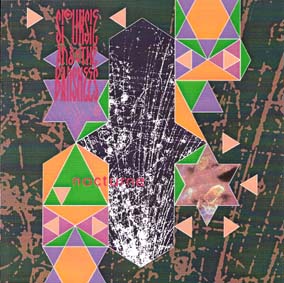 Click on cover for full scan
|
|||
| Notes: |
All songs remastered Liner notes courtesy of Paul Morley |
||
| Released: | 06/04/09 | ||
| UK Chart: | No. | ||
| US Chart: | No. | ||
| Sleeve Design: | Banshees/Da Gama | ||
| Reissue Designed By: | Bold, London | ||
| Producer: | Banshees/Hedges | ||
| Digitally Remastered By: | Gary Moore/Kevin Metcalfe | ||
| Tapes Sourced By: | Steven Severin/Zoe Roberts | ||
| PRESS | ||
|
|
||
| The Word May 09 | ||
 Mid-Goth
Crisis Mid-Goth
Crisis
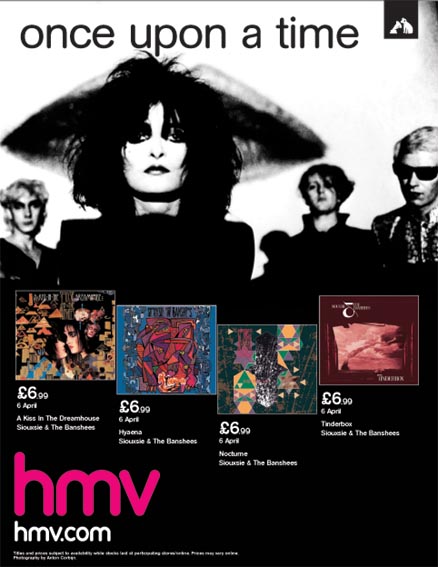
After their early greatness but before the percussive influence of The Creatures - Siouxsie & The Banshees' variable '80s. There's something brilliant about Siouxsie & The Banshees. Even if you don't like them, even if you blame them for goth or Tim Burton (how many songs about voodoo dolls does the world need, really?), you ought to admit that they were extraordinary. Outcasts of punk, astonishingly it seems now, heroes of Peel sessions, they instantly forgot about Nazi posing (no, they weren't Nazis, but there was an armband and that never-forgiveable lyric in Love In A Void) and released one of the most ecstatically pop-pink singles of the day, Hong Kong Garden. Then there were two brutally wonderful albums, The Scream and the under-rated Join Hands. And then two of the band left. And then John McGeoch, the greatest lead guitarist of post-punk, joined and helped Siouxsie, Severin and new drummer Budgie to turn the Banshees into a great post-punk pop band, a phase that included McGeoch's brilliant monument, Juju. And here we are now with the mid-period reissues, and it's going to get a bit wobbly from here on in. The Banshees' problems would always revolve around two things: one, they found it hard, as we shall see, to keep a stable lineup; two, the core lineup was prone to a certain stylistic saminess. So, as John McGeoch's alcholism reduced his musical contribution, the Banshees found themselves making A Kiss In The Dreamhouse, an album that would be Juju part two if it weren't for the addition of a uniquely gorgeous production style, all strings and percussion, glitter and Klimt. Dreamhouse is so lushly luscious that the Banshees song from this era I've always associated with it - the achingly lovely Fireworks - isn't even on it (it turns up now, in its excellent 12-inch version). But there is the wonderfully John Barry-like waltz of Melt and the very saucy Slowdive, a song about sex so sexy that even the normally frosty Siouxsie is compelled to pant "Oh my God!" in the middle. Dreamhouse also opens with the obligatory great "single that never was", Cascade; it ought to have been great, but it slips quickly into Banshee filler. On Hyaena, McGeoch was replaced by temporary Banshee and Severin collaborator Robert Smith, off of The Cure. ("I beat them at pool,"" Smith said during his time in the band, "and they get ratty." That's my favourite quote about Siouxsie & The Banshees). Smith couldn't stay in the band - he had to go and invent goth and Tim Burton - and a sense of marking time runs through Hyaena. If A Kiss In The Dreamhouse is Juju 2, then songs like Dazzle were Dreamhouse 2. There are some good moments here.: the tacked-on cover of Dear Prudence would have been a lovely flipside to a Banshees' White Album 45 of Helter Skelter, and Swimming Horses (the first great song about seahorses) is oddly haunting, but this is still an inessential album. Robert Smith played on Nocturne too, also reissued here. This could have been an epic live album - a double, no less, recorded at the Royal Albert Hall, the elite venue of post-punk. Nocturne is alright, and no more; Siouxsie asks fans shouting for old songs if they've come from a time tunnel, then she presents a selection of songs old and new which fit stylistically into the band's early-'80s template and don't particularly blossom live. The much, much better Seven Year Itch live album does the job better. Time passed. The Banshees entered a time tunnel and released the lovely The Thorn EP, with its orchestral versions of songs from their first two albums; then they got themselves a proper permanent guitarist, John Carruthers from Sheffield's Clock DVA. Carruthers, as well as bringing a healthy northern with to the band (when they played on The Old Grey Whistle Test, a camera zoomed in on a sticker on Carruther's guitar that read OH NO! NOT ANOTHER BORING GUITAR CLOSE-UP!) was also a robust guitarist, and on Tinderbox he took the band away from the psychedelic whimsy that sometimes threatened to infest their music. I interviewed Siouxsie and Severin in 1985 when Tinderbox came out and made the slight error of telling them that I thought it was rubbish. As Severin stared into his teacup (like all Banshees interviews, it took place at Fortnum & Mason), Siouxsie patiently explained that I was completely wrong, and later told the Melody Maker that they wouldn't be talking to the NME again (that's my most embarrassing Siouxsie & The Banshees story). Nearly 25 years later, I have to revise my judgement, Tinderbox does in fact have some great moments - the superb, chunky single Cities In Dust, for example, the horny 92 Degrees and the great Candyman - but its production sounds stodgy, and long songs like This Unrest and Sweetest Chill are Banshees by numbers. After Tinderbox, the Banshees began to incorporate the percussive brilliance of Siouxsie and Budgie's Creatures spin-off, and they got interesting again, and even worked with Tim Burton. Better was to come. |
||
More press... |
||
| CD | |||
|
|
|||
|
|
|||
| UK CD | Track Listing | ||
|
|
|||
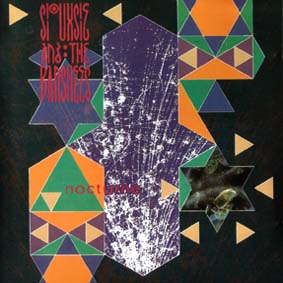 Cat: 839 009-2 Click on cover for full scan |
|||
|
|
|||
| First Released On CD: | 24/04/89 | ||
| UK Chart: | N/A | ||
| US Chart: | N/A | ||
| Sleeve Design: | Banshees/Da Gama | ||
| Producer: | Banshees/Hedges | ||
| PRESS | ||
|
|
||
| Q 1989 | ||
 Chilling Chilling
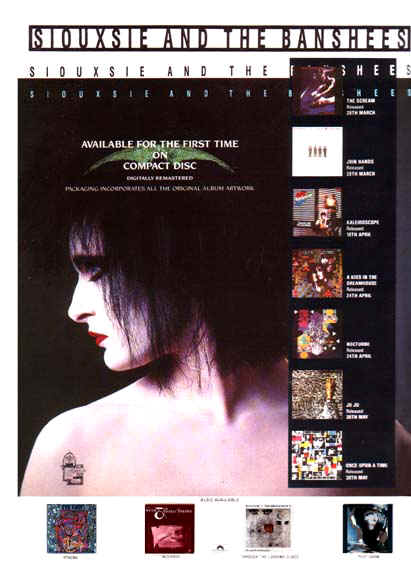
From ice maiden to carnival queen - Siouxsie And The Banshees on CD. At the dawn of punk, Siouxsie Sioux was chiefly renowned for her dismissal of Bill Grundy as "a dirty old man" and for a dress sense designed to provoke an outbreak of British sexual hypocrisy. The Banshees may have made their debut at the 100 Club Punk Festival in 1976 but their extended assault on The Lord's Prayer was as much a dare as a stab at launching a career. Siouxsie's original invention was herself and that unflinching stare remains one of the great icons of punk's disdain. These beginnings render it all the more surprising that, 11 albums on, the Banshees have long transcended the first flush of punk to create an unmatched legacy of dramatic and very British pop. Polydor's release of the first seven Banshees titles on CD means that all their output is now available on compact disc bar the two "holiday projects", The Creatures and The Glove. If Siouxsie's reputation remains that of the haughty Queen of Gothic Punk, these CDs suggest that, within the parameters of their brooding and fantastical world view, there is a good deal more to Siouxsie and her long-term partner Steve Severin than that enduring image suggests. Although Siouxsie and Severin's punk credentials are impeccable, the Banshees were the last of the original punk clan to release a record. By the time Hong Kong Garden entered the Top Ten in August 1978, the Banshees had already seen their fair share of touring and rapidly progressed beyond the confrontational three-chord thrash that had rendered punk a musical cliché. Spearheaded by John McKay's sheet-metal guitar, their debut LP The Scream virtually invented the Gothic rock genre overnight and stands alongside Magazine's Real Life as a turning point in punk's movement away from rabble-rousing and into the internal landscape of the psyche. While songs like Carcass are dated by their goose-stepping beat and stone-faced delivery, the gut-wrenching Overground and the dizzy Jigsaw Feeling demonstrate that already the Banshees were far more concerned with psychodramas of disgust than confronting society head on. The Scream was a new take on suburban angst as Siouxsie's howling vocals intimated that the boredom and alienation of suburban life amounted to nothing less than a horror show. On later albums, the Banshees would uncover a rich exoticism in suburban fears; on The Scream, Steve Lillywhite's thundering production ensures that they sound trapped. Restored on CD to all its forbidding austerity, The Scream is both a declaration of intent and something of an artistic full stop. The following year's Join Hands indicates that while only PiL could match the Banshees' chilling wail of noise, they'd left themselves little room to manoeuvre. McKay's guitar still seesaws disturbingly and Severin's ear for compelling bass riffs is apparent on Placebo Effect, but while Siouxsie turns domestic claustrophobia into Gothic nightmare on Premature Burial and Mother, her vocals are oddly unwieldy. While Hong Kong Garden had displayed an ability to combine a playful sense of unease with driving pop melody, on Join Hands there are only riffs. The departure of McKay and drummer Kenny Morris a mere four days after its release suggests that the Banshees' two halves had indeed reached an impasse. The next album Kaleidoscope featured the now long-serving Budgie on drums and guitar work from John McGeoch and Steve Jones. The Banshees' embattled state obliged Sioux and Severin to rediscover their pop flair and the album's tow singles, Happy House and Christine, display a renewed ability to surround Siouxsie's icy mixture of fatalism and sarcasm in the kind of melodies that even a punk's parents might hum. The inventiveness of a piece like Red Light, driven along by the clicks of a camera shutter, proved that the Banshees were considerably more than a one-trick pony. 1981's Juju finds McGeoch firmly ensconced on guitar, Sioux and Severin devoting themselves to an exhaustive exploration of the power of idols and the Banshees reborn as a magisterial hard rock band. On moody songs like Arabian Knights, Siouxsie unveils a new sensuality while the Banshees display the brooding authority of the Stones circa Paint It Black. Juju confirmed the Banshees' staying power even if their frequent assaults on the singles chart has never own them a mass following like that of The Cure. Most early Banshee albums have their indigestible moments and the argument that they are the best singles band gains some credence from the Once Upon A Time collection where early singles like The Staircase gain contrast from later stabs like the eerie Israel. A sequel is now surely due. A Kiss In The Dreamhouse (1982) found the Banshees further investigating the kind of offbeat textures that Brian Jones brought to the Stones in the mid-'60s. Songs like She's A Carnival and Cascade make gorgeous use of strings while Siouxsie's voice acquires a hidden warmth for studies in erotic extremity like Melt! and Obsession. Dreamhouse probably remains the Banshees' finest hour. In 1983, the Banshees marked time with the live Nocturne, a well-recorded resumé of the band's capacity for Sturm und Drang lightened by the occasional exchange with the audience ("What time tunnel did you crawl out of?" Siouxsie asks one particularly nostalgic punk fan). McGeoch had flown the nest immediately after the Dreamhouse and Nocturne misses his magisterial authority despite Robert Smith's capable but understandably muted understudying. Smith soon departed in turn and the Banshees spent the mid '80s trying to capture their old fire. The Banshee's origins and Siouxsie's forbidding stare have made it hard for them to escape their punk associations while their use of horror imagery has occasionally blinded fans to the questions of power and threatened innocence their unsettling narratives explore. These CDs lend their work a fresh clarity and trace a remarkable evolution which serves as a reminder that, for its bravest exponents, punk was always more a question of daring than a set of conventions. The Scream 4/5 Mark Copper |
||
More press... |
||
| IMPORTS/PROMOS | |||
|
|
|||
|
|
|||
| Japanese Import LP | Track Listing | ||
|
|
|||
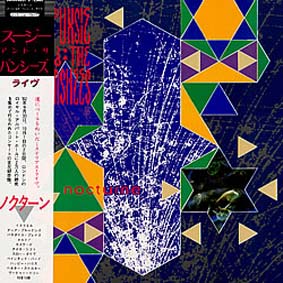
|
|||
| PRESS | ||
|
|
||
|
|
||
| NME 11/83 | ||
|
|
||
|
When I eased myself into one of the Albert Hall's loggia boxes seven weeks ago I hadn't seen Siouxsie And The Banshees since '78, and was delighted by how they'd changed from a grinding Teutonic angst machine into, well, the nearest thing I've seen to Led Zep '75. Take 'Nightshift', a highlight both at the time and on record. That riff is so heavy, those chord changes so mindblowingly monumental, it's '81's equivalent to LZ's ornately steamhammering classic from '74, 'Kashmir'. With each you feel you're being stomped by a rhinestone-encrusted brontosaurus. Mmm, bliss.... And how about Robert Smith's resonant acoustic strumming on 'Pulled To Bits'? It could be 'The Battle Of Evermore' refought. Heavy, colourful, and varied - the Banshees have inherited LZ's epic mantle. And their ideas about stagecraft, even down to the dry ice - just the sort of empty spectacle punk was supposed to be reacting against in '76. All that's missing is Budgie's drum solo. But I love it in all it's splendid predictability. Who doesn't enjoy a bit of good old-fashioned showbiz now and then? The difference, if any? Led Zeppelin dressed up their mega-blues-rock in a motley garb of Olde Englishe antiquarianism, Tolkeinish runes and megaliths, Pre-Raphaelite curls and little girls, Arthurian Excaliburs and Ladies in the Lake. Siouxsie And The Banshees are altogether more interesting. Proceeding from Nazi fetish chic of Cabaret neurosis, The Banshees have delved further and further back to elaborate their schtick. They've reversed into Europe's late 19th century, pre-Freud, pre-Jung, when artists were using imagery absorbed from the East to articulate strange fears and tensions that simmered beneath the surface of an apparently calm and ordered civilisation: the zeitgeist which preceded the bloodletting of the 20th century. Very Apocalypse, very now. Look at Siouxsie, her poses, clothes, sleeves, even music, and you can see a mosaic of exotica-erotica; Khnopff, Munch, Beardsley, Moreau, Delville, Toorop, Klimt, Schiele, Redon... and so on. There she is on stage, togged out in something straight out of Erte or Bakst, waving those curiously plump arms around in that ritualised dervish-whirl, a vision simultaneously both impressive and laughably pretentious. She may be the bastard daughter of rock 'n' roll and the Diaghilev Ballet, but she ain't no dancer. Yes, the excellently psychotic 'Helter Skelter' is here, as is that other 'White Album' cover, the cursorily proficient and much needed at the time hit single, 'Dear Prudence'. You'll find 14 other favourites, all magnificently sung and played. My vote goes to 'Spellbound' from '81's terrific 'Juju'. Nothing from last year's highly decorated but underpowered "A Kiss In The Dreamhouse" can match its excitement. And '83? Double live albums often appear to conceal creative constipation - could 'Nocturne' be a sign of decline? Whatever, a fine record, a good show. But only a show. Once pioneers, Siouxsie And The Banshees are now no more than stylish but conservative entertainers. "Which time tunnel did you come through?" Siouxsie enquires of a truculent fan. Probably the same one as she did. Mat Snow |
||
|
|
||
| Pulled To Bits Lyrics | ||
|
Tongues
are clacking Pulled to
bits Buildings
bleached with chatter chatter clatter Pulled to
bits Young
lungs snapping, coming up for air Pulled to
bits in silence Pulled to
bits |
||
| Pulled To Bits Credits | ||
| Severin
- Lyrics Sioux - Voice & Tambourine Severin - Bass Smith - Guitar Budgie - Drums |
||
| Inspiration/Influence/Band Comment | ||
| Inspiration/Influence/Band Comment: The acts of copy cat violence that followed the release and subsequent withdrawal of Stanley Kubricks A Clockwork Orange. | ||
|
|
||
| Eve White/Eve Black Lyrics | ||
|
It hurts I can feel
it coming Let me out
of here Let me out
of here Let me out
of here Let me out
of here Never say
die Let me out
of here |
||
| Eve White/Eve Black Credits | ||
| Sioux
- Lyrics Sioux - Voice Severin - Bass Smith - Guitar Budgie - Drums |
||
| Inspiration/Influence/Band Comment | ||
| Based
on a real woman Christine Sizemore who suffers from Multiple Personality
Disorder. The inspiration for this song was the book I'm
Eve by Christine Costner - Sizemore & Elen Sain - Pittillo.
Written after reading The Three Faces Of Eve by Thigpen & Cleckley Source: Zigzag 05/80 & The File, Phase One. |
||